
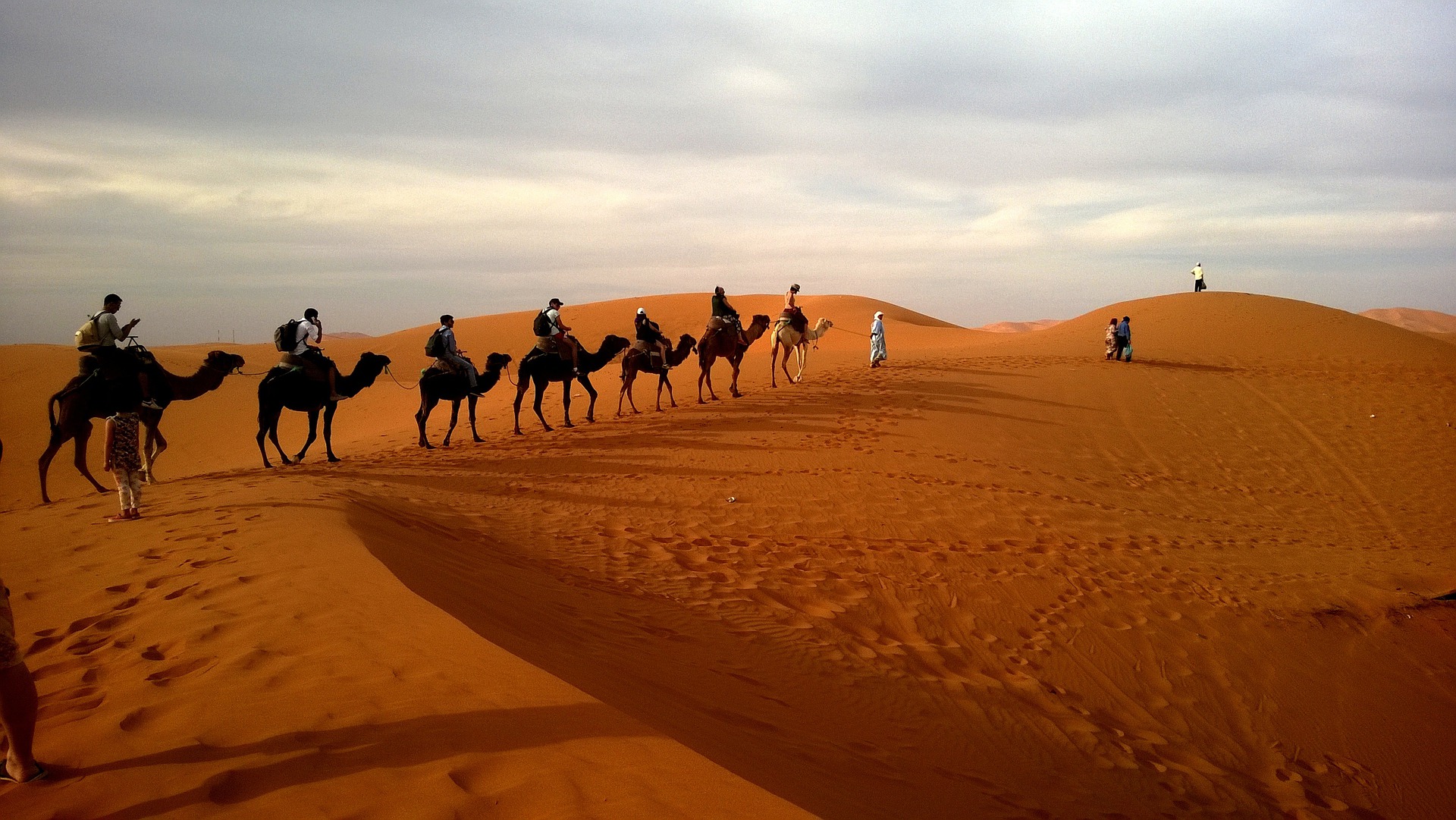

Jaisalmer sits right on the edge of the Thar Desert, and that one fact decides almost everything about when to visit. Unlike hill stations or coastal towns where the weather shifts gently across seasons, Jaisalmer swings between two extremes: a stretch of the year that's genuinely pleasant, and a stretch that tests even people who grew up in hot climates. Getting the timing right changes the whole trip, from how long you can spend on the dunes to whether the camel safari feels like an adventure or an ordeal.
Why Timing Matters More in Jaisalmer Than Most Places
Most of what people come to Jaisalmer for happens outdoors. Fort walks, camel rides, jeep safaris across the dunes, evenings spent sitting around a campfire under a clear sky, none of it works well if the heat is unbearable or the wind is kicking up sand every few minutes. That's what makes the desert different from a city trip where you can duck into a museum or a café when the weather turns. Here, the weather more or less sets your itinerary.
October to March: The Season That Actually Works
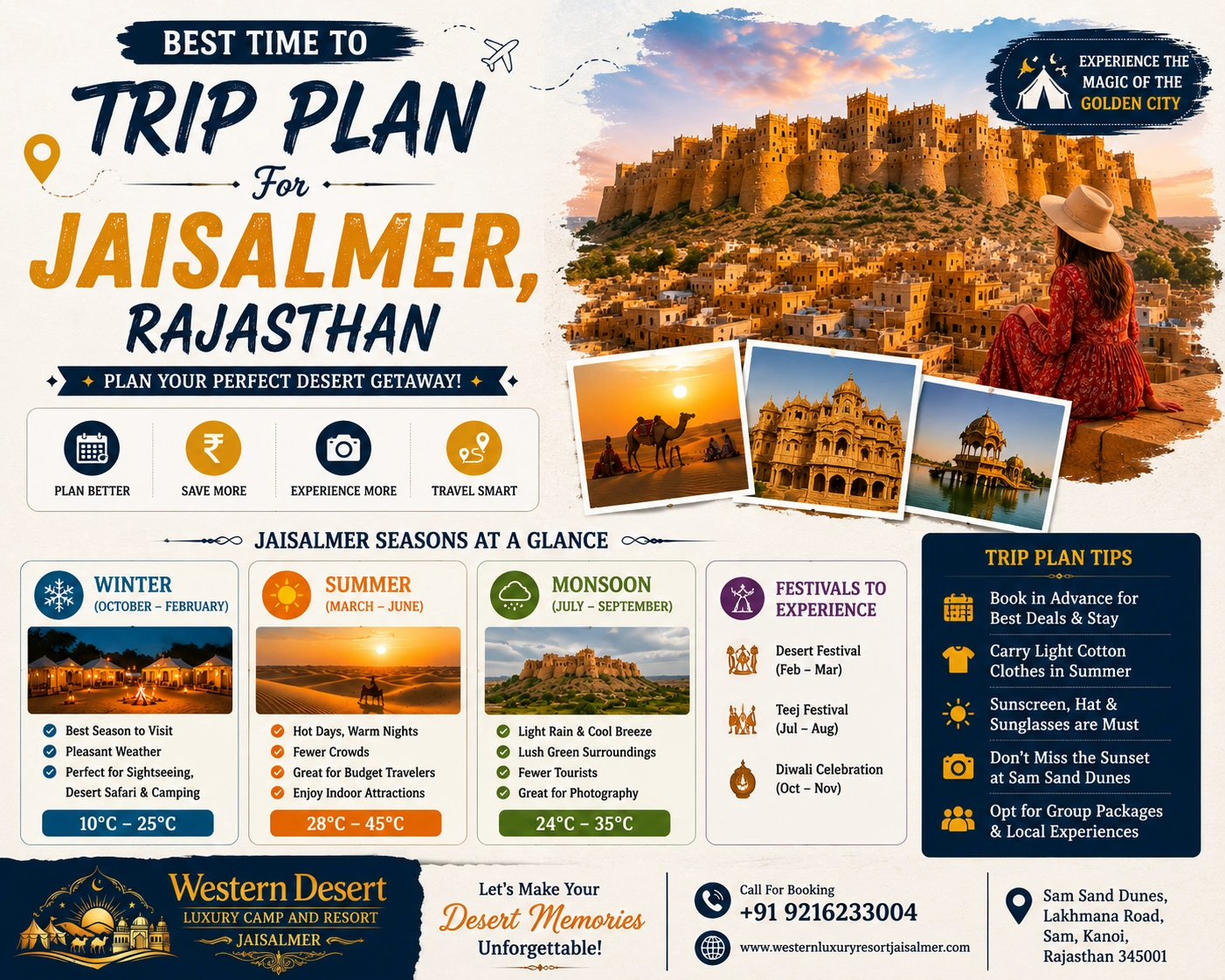
This six-month stretch is when Jaisalmer becomes what the postcards promise. Daytime temperatures generally sit between 15°C and 28°C, cool enough to walk around the fort at noon without needing shade every ten minutes, and warm enough that you're comfortable in a t-shirt through the afternoon. Nights are a different story, often dropping close to freezing in December and January, which is part of the appeal if you're staying at a desert camp. Sitting around a bonfire under a genuinely dark, star-filled sky only feels special because it's cold enough outside to want the fire in the first place.
Within this window, December and January are the coldest and the busiest, since they line up with winter holidays and the Jaisalmer Desert Festival held every February. Booking a camp or a package during these months without planning ahead usually means settling for whatever's left rather than what you actually wanted. October, November, and March tend to be a touch warmer during the day and noticeably easier to book, which makes them worth considering if you'd rather avoid the crowd than chase the coldest nights.
April to June: The Months to Avoid
Summer in Jaisalmer isn't just warm, it's genuinely extreme. Daytime temperatures regularly climb past 40°C and have touched close to 48°C in peak summer, with hot winds sweeping across the sand that make outdoor activity nearly impossible between late morning and early evening. Camel and jeep safaris either get shortened dramatically or shift to very early morning and late evening slots, and even then, the heat takes a toll. Hotel and camp rates do drop significantly this time of year, so if budget is the only concern and you're willing to structure the entire day around avoiding the sun, it's not impossible. For most travelers, though, this window works against the very reasons people come to Jaisalmer in the first place.
July to September: The Quiet, Unpredictable Stretch
Monsoon reaches Jaisalmer in a much lighter form than it does the rest of India, since this is desert country and rainfall stays sparse even during these months. What you do get is a slight, temporary shift in the landscape, patches of green appearing across otherwise bare dunes, along with lower hotel rates and far fewer tourists. The trade-off is unpredictability. Humidity climbs, and while heavy rain is rare, when it does show up it can disrupt safaris and outdoor plans without much warning. It's a reasonable window for travelers chasing off-season prices and a quieter fort to explore, but not the season to bank on for a picture-perfect desert camp experience.
Planning Around Festivals and Events
If timing your trip around something more than good weather appeals to you, the Jaisalmer Desert Festival in February is the standout event, three days of folk performances, camel decoration contests, and desert games held against the backdrop of the dunes. It's also when the town is at its busiest, so anyone planning around the festival should book accommodation and desert camp packages well in advance rather than a week or two out. Diwali, usually falling in October or November, is another period worth knowing about, since it draws a wave of domestic travelers and pushes both prices and availability in a similar direction.
What a Well-Timed Trip Looks Like
A three or four day trip during the winter season generally gives you enough room to cover Jaisalmer properly without feeling rushed. A day for the fort, the havelis, and Gadisar Lake in the city itself, followed by one or two nights out at the Sam Sand Dunes for the camel safari, sunset views, and a night in a desert camp, covers the core of what draws people here. Anyone trying to stretch a summer visit into the same itinerary usually ends up compressing outdoor time into early mornings and cutting the rest of the day short, which changes the character of the trip considerably.
A Few Practical Notes for Whenever You Go
Layering matters more than people expect, even in winter. Afternoons can feel genuinely warm while nights drop close to freezing, so packing for both ends of that swing saves a lot of discomfort. Sunscreen and a hat are worth carrying regardless of season, since the desert sun is intense even on cooler days. And if your trip does land outside the October to March window, building in flexibility, shifting safaris earlier or later in the day, keeping plans loose around the hottest hours, makes a bigger difference than almost anything else you could plan for.
Frequently Asked Questions
Q1. What is the best month to visit Jaisalmer?
December and January are the most popular months, with cool days and cold nights that suit desert camping well. If you'd rather avoid the winter crowd, October, November, and March offer nearly the same comfortable weather with more availability and lighter pricing across hotels and camps.
Q2. Which months should I avoid visiting Jaisalmer?
April through June brings extreme heat, often crossing 40°C to 45°C during the day, which makes outdoor activities like camel and jeep safaris difficult outside early morning or evening. Unless you're specifically chasing off-season rates and don't mind restructuring your day around the heat, it's best avoided.
Q3. How do I reach Jaisalmer by train, and where does it arrive?
Jaisalmer Railway Station (station code JSM) is a small terminus station connecting mainly to Jodhpur, Bikaner, and Delhi. Key trains include the Runicha Express and Ranikhet Express, most arriving in the early morning between 5 AM and 11 AM. Since Jaisalmer sits at the end of the line, journeys typically involve overnight travel.
Q4. Where does the bus stand in Jaisalmer, and what routes run from there?
Jaisalmer's main bus stand is on Airforce Road, close to the town center, handling both government RSRTC buses and private operators. Regular services connect to Jodhpur (about 5-6 hours), Bikaner (about 7-8 hours), and Jaipur (roughly 10-12 hours), with most long-distance buses departing in the afternoon or running overnight.
Q5. Is it better to hire a car for the Jaisalmer trip, and where do I arrange it?
Hiring a car with a driver is common for travelers coming from Jodhpur (about 5 hours), Bikaner (about 5-6 hours), or Jaipur (roughly 10-11 hours), and most desert camps and hotels in Jaisalmer can arrange pickup directly. It's especially useful during winter when combining Jaisalmer with nearby cities like Jodhpur on the same trip.
Q6. Is Jaisalmer worth visiting during the monsoon season?
It can be, if you're mainly after quieter streets and lower prices. Rainfall is light and unpredictable rather than heavy, and while it occasionally disrupts a safari, the temporary greenery across the dunes is something few visitors get to see. It's not the season to plan around if a classic desert camp experience is the priority.
Q7. How many days are ideal for a Jaisalmer trip?
Three to four days works well for most travelers, covering a day in the city for the fort and havelis, plus one or two nights at the Sam Sand Dunes for the camel safari, sunset views, and a desert camp stay. Trips during peak winter months are worth booking a few weeks ahead given how busy the season gets.